
The Left Side Fell Silent

There are certain movements that become so familiar they stop feeling like movement at all.
They become expectation.
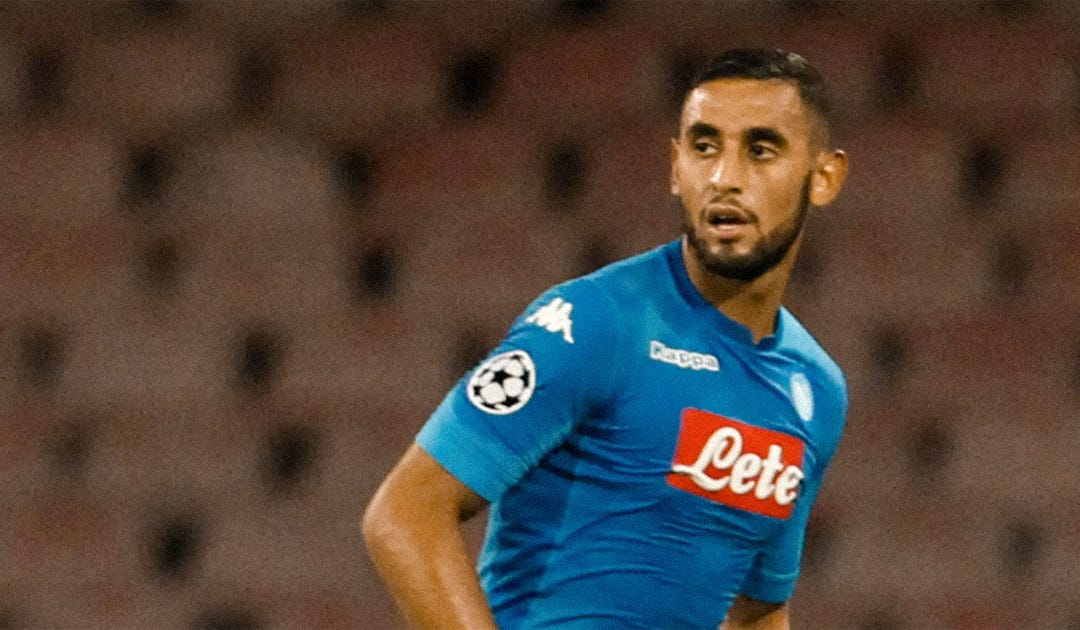
For three seasons under Maurizio Sarri, the left side of the Stadio San Paolo belonged to one of those expectations. Long before the ball arrived, the crowd already knew what would happen next. Marek Hamšík would receive between the lines, Lorenzo Insigne would drift quietly towards the centre of the pitch, taking a defender with him, and somewhere beyond everyone’s peripheral vision, Faouzi Ghoulam would already be running.
It happened so often that it no longer felt rehearsed.
It felt inevitable.
Football often celebrates the extraordinary, the impossible pass, the spectacular goal, the moment that forces eighty thousand people onto their feet. But some of its greatest beauty lives inside repetition. The same movement. The same angle. The same overlap. Week after week until it becomes less like a tactical pattern and more like a language.
For a while, nobody spoke that language more fluently than Napoli.
The left flank became a place rather than a position. Hamšík measured it. Insigne reshaped it. Ghoulam stretched it until there seemed to be space where no space should have existed. Watching them together felt strangely calming, even in the middle of matches that carried enormous weight. There was always the sense that if the ball reached the left side, order would return.
Ghoulam never looked hurried.
That was the remarkable thing.
He covered extraordinary distances without appearing to chase the game. His stride was long, balanced and almost economical, as though he understood that timing mattered more than speed. His crosses rarely felt hopeful. They arrived with intention, bending gently into spaces that seemed to exist only because he had imagined them first.
For a few years, the left side of the San Paolo became one of the most beautiful places in European football.
Not because it dazzled.
Because it repeated itself with such quiet perfection.
Supporters began recognising the movement before it unfolded. You could hear it in the stadium, not a roar, but an intake of breath travelling across the Curva as Hamšík lifted his head. People weren’t reacting to what they were seeing. They were anticipating what they already knew.
That kind of certainty is rare in football.
It is rarer still in Naples.
Then came November 1st, 2017.
Manchester City arrived in Fuorigrotta carrying the confidence of the richest football project in Europe. Yet for half an hour, Napoli played without fear. The football still flowed through familiar channels. The triangles still formed. The rhythm remained untouched.
Until it didn’t.
The injury lasted only a moment.
Its consequences lasted years.
Medical reports describe torn ligaments with detached precision, reducing loss to diagrams and recovery timelines. But that is not how Naples remembers that night.
Naples remembers the silence.
Not because the stadium stopped singing, but because everyone instinctively understood that something larger than a player had disappeared. It felt as though one side of the pitch had suddenly forgotten how to move. The rhythm remained, but one note had gone missing.
The geometry had broken.
The months that followed became an exercise in patience.
Then hope.
Then disappointment.
Then hope again.
Each comeback carried the quiet optimism that perhaps this time the old Ghoulam would return. Each setback felt heavier than the last. The injuries were no longer interruptions; they became part of the story itself, turning one of Europe’s finest full-backs into a player forever chasing a version of himself that had existed before November.
Football rarely waits for anyone.
Systems evolve. Players arrive. Seasons move on.
But memory is less efficient.
Ask a supporter about Ghoulam today and they rarely begin with the injuries. They remember the overlap. The timing. The certainty. The way Insigne could drift inside without looking because he already knew who would appear outside him.
That partnership was never simply tactical.
It became part of how Naples understood football.
Ghoulam never lifted the Scudetto his football deserved.
In another story, perhaps he would have.
Instead, his final years were spent watching more than playing, carrying himself with the quiet dignity of someone who understood that love from a city is not always earned through endings. Sometimes it is earned through what people remember before everything changed.
Years pass.
Another left-back accelerates towards the corner flag beneath the lights of Fuorigrotta.
The crowd still rises.
The overlap still exists.
The cross still comes.
But for those who remember those Sarri evenings, there is always the faint feeling that something remains unfinished.
Not the run.
Not the system.
The certainty.
Because for a brief moment, football on the left side of Naples felt inevitable.
And some forms of beauty are remembered most clearly not because they lasted, but because one day, without warning, they stopped.
Really nicely written, still remember Hamsik at that time. What a player